The Men Behind the Mummy
& El Tuweina. A Residence in the Desert
30.10.2026 - 31.03.2027
Why did citizens of Hamm found an association in 1886 to purchase an ancient Egyptian mummy? The Studio exhibition recounts the fascinating story of the Hamm Mummy Society while also taking a critical look at the allure of Ancient Egypt, colonial collection histories and the responsible handling of human remains.
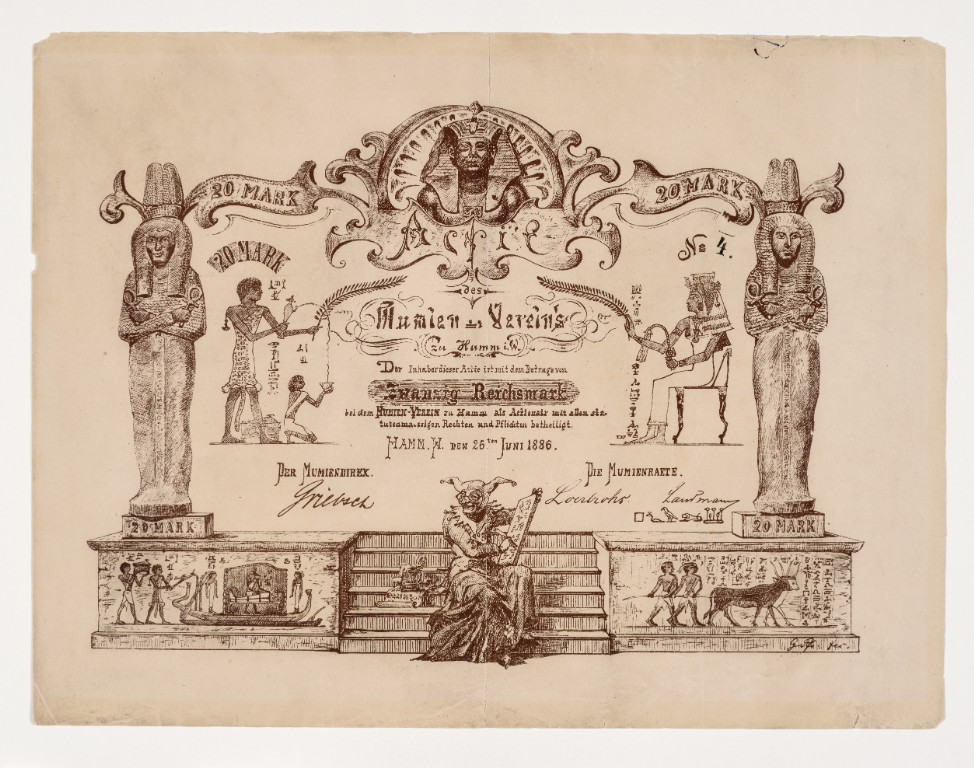
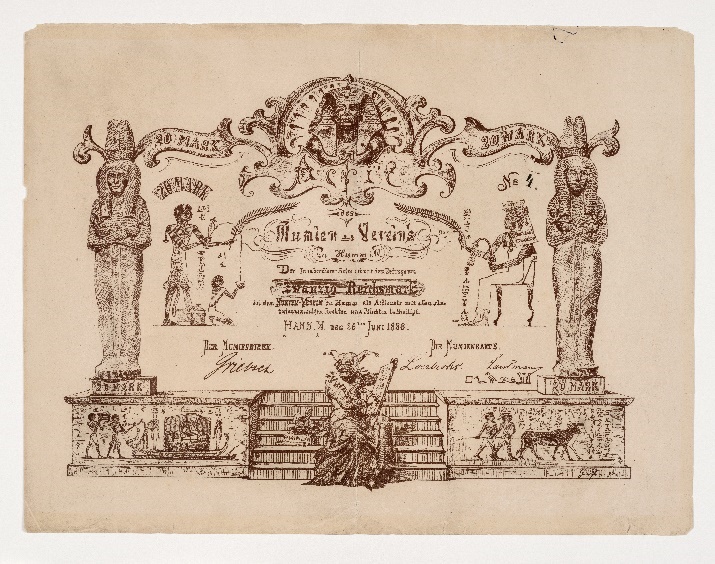

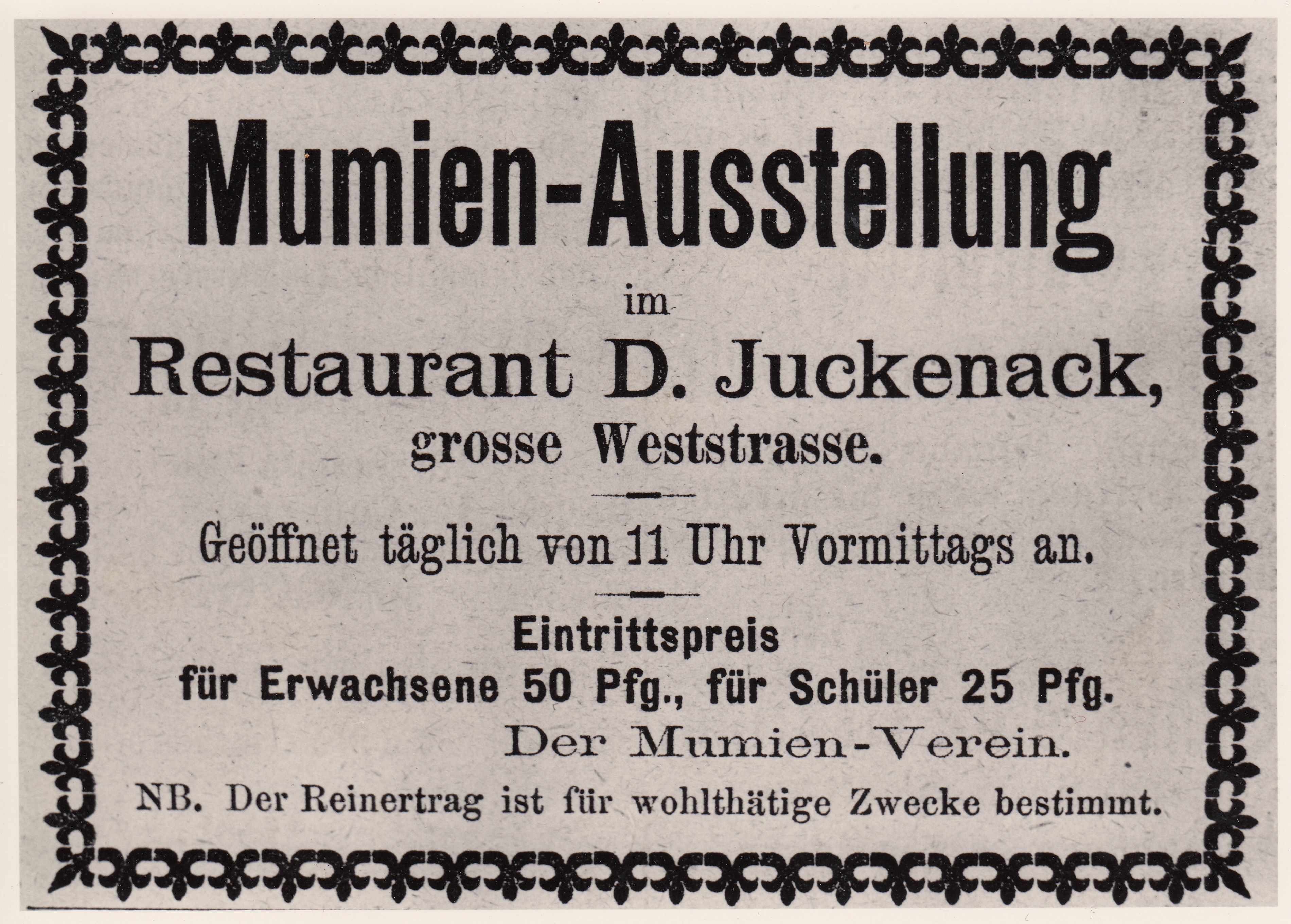
The story of the so-called Hamm Mummy Society is one of the city of Hamm’s most widely recounted tales: in 1886, twenty citizens of Hamm joined together to form an association whose stated aim was to purchase an ancient Egyptian mummy. The project was financed through the sale of so-called ‘mummy shares’, one of which is still preserved in the collection of the Gustav-Lübcke-Museum. The purchase was completed in the same year the association was founded, and the mummy was transported to Hamm. As early as 1887, the Mummy Society disbanded and handed the mummy over to the city’s Museumsverein. The mummy was destroyed during the Second World War; the only surviving record of it is a black-and-white photograph.
The Studio exhibition in autumn 2026 takes this episode of local historical significance as its starting point in order to contextualise it academically: the focus is on the social and intellectual-historical background of the Mummy Society, as well as its place within the ‘Egyptomania’ that was widespread in the late nineteenth century. At the same time, the exhibition sheds light on the motives of those involved and the historical conditions under which human remains from Egypt were brought to Europe and publicly displayed, while also addressing the responsibility of museums in dealing with collection practices shaped by colonialism. Furthermore, it explores the question of whose mummy it was and how it came to be in Hamm.
El Tuweina. A Residence in the Desert
30 October 2026–15 April 2027 | Cabinet exhibition within the permanent exhibition ‘Ancient Egypt’
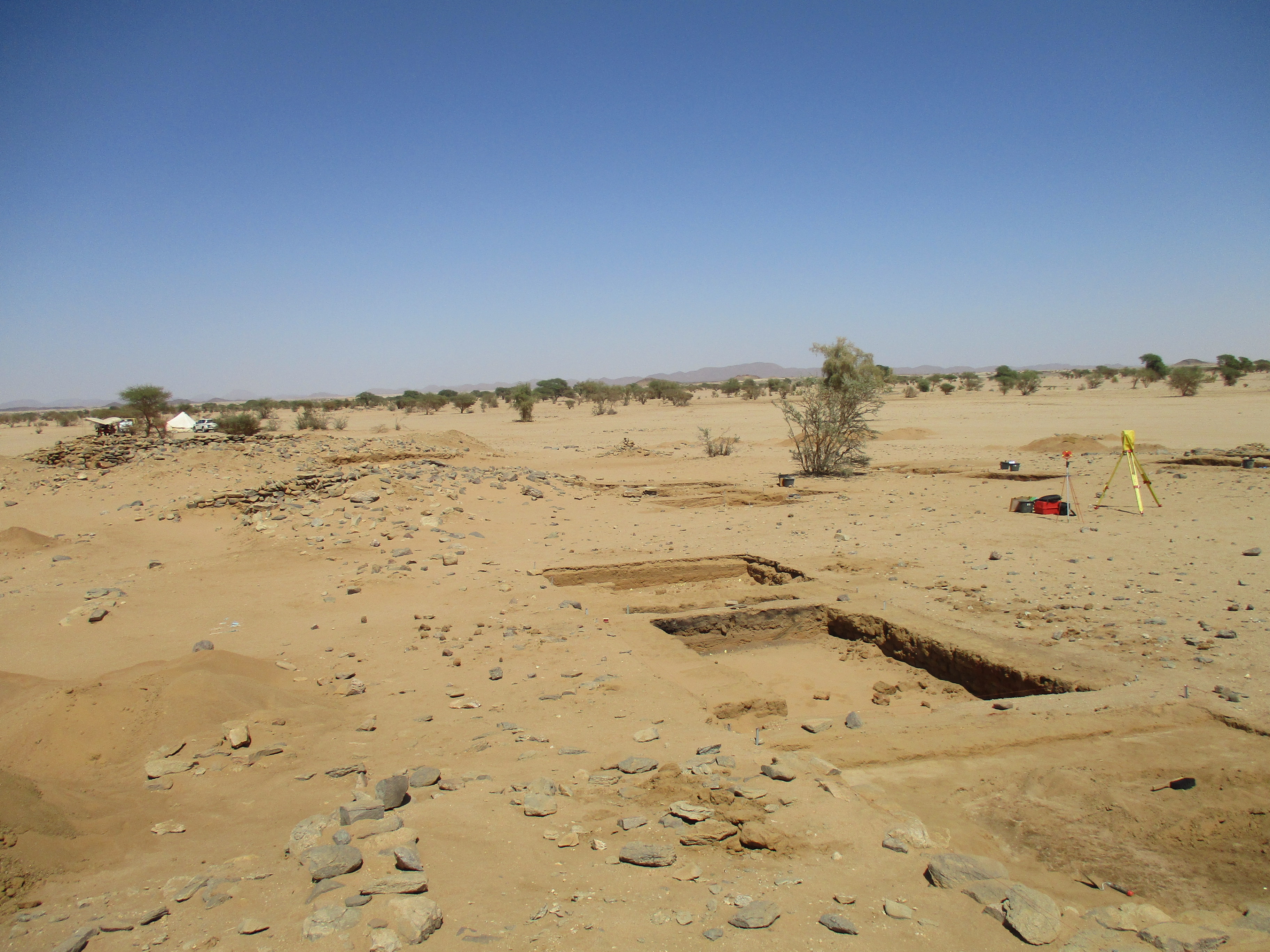
With this cabinet exhibition, the Gustav-Lübcke-Museum offers an insight into current archaeological research in Sudan. The focus is on the settlement complex at El Tuweina, situated in the upper Wadi Abu Dom in the Bayuda Desert. The site was archaeologically investigated by the Institute of Egyptology and Coptology at the University of Münster in 2013 and again from 2017 to 2019.
The complex, comprising three structures with walls of stone and clay bricks, dates to the Late Meroitic period (third century CE) and served as a regional centre in a landscape otherwise characterised by mobility. The architecture, pottery and other finds reveal a distinct material culture. Fragments of red-painted plaster, as well as metal and faience objects, point to a local elite who used the site.
Some of the excavation finds were taken to Germany for research purposes. Due to the ongoing war in Sudan since 2023, these artefacts have not yet been returned and are currently in Münster. This armed conflict endangers not only the lives of Sudanese people, but also their cultural heritage. Archaeological sites and museums are being damaged, destroyed or looted, and the illegal trade in antiquities is increasing.
This cabinet exhibition offers a rare opportunity to present these research findings to the public for the first time, providing insights into the lives of people in the Bayuda Desert around 1,700 years ago.
The exhibition was developed during the summer semester of 2026 by Prof. Dr Angelika Lohwasser of the University of Münster and Jalina Tschernig, Head of the Ancient Egypt Department at the Gustav-Lübcke-Museum, in collaboration with students from the University of Münster.
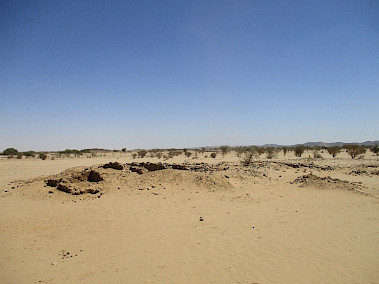
Blick auf El Tuweina © Angelika Lohwasser